



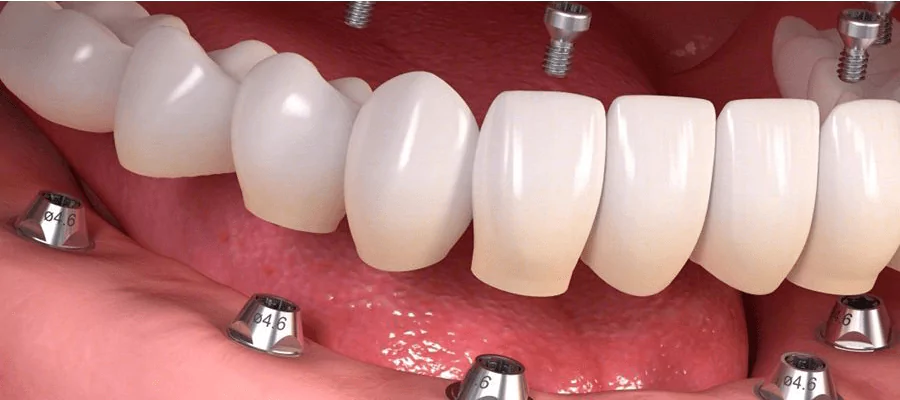
Implant-supported prosthesis is a prosthetic structure placed on implants to restore the oral functions and aesthetic appearance of individuals who have experienced tooth loss. While this treatment method offers chewing and speaking functions closest to natural teeth, it also achieves successful aesthetic results. After implants are placed into the jawbone, and the healing process is completed, the prostheses are placed as fixed or removable.
Fixed implant-supported prostheses are designed as bridges or single teeth and are screwed or cemented onto the implants. These types of prostheses offer a usage similar to natural teeth and are ideal especially for patients with high aesthetic expectations. Removable implant-supported prosthesis, on the other hand, is attached to the implants with retentive components, providing better retention inside the mouth. In this way, a more stable and comfortable use is achieved compared to conventional dentures.
One of the advantages of implant-supported prostheses is that they largely prevent jawbone resorption caused by tooth loss. When implants integrate with the jawbone, the chewing forces are transmitted to the bone, helping it remain healthy. With this treatment, an aesthetic, functional, and long-lasting solution is obtained. However, regular oral care and periodic check-ups should not be neglected for the maintenance of the prostheses. In this way, implant-supported prostheses provide healthy and comfortable use for many years.
İçindekiler Tablosu
How Is an Implant-Supported Prosthesis Made?
An implant-supported prosthesis is made by placing specially prepared prostheses onto implants inserted into the jawbone. In the first stage, implants made of titanium are placed surgically into the area with tooth loss. These implants fuse with the jawbone (osseointegration), forming a stable and strong foundation. This process usually takes several months, and it is important to wait for the implants to fully fuse with the bone.
After the implants have fused with the bone, special parts (abutments) that will support the prostheses are placed on them. These components ensure that the prosthesis is fixed onto the implants. Then, prostheses are designed and prepared to suit the patient’s tooth and jaw structure. Fixed prostheses are placed by screwing or cementing them onto the implants and provide an appearance and function similar to natural teeth. Removable prostheses, on the other hand, are connected to the implants through retentive mechanisms and can be removed when necessary.
Before and after placing the prostheses, the dentist checks the prosthesis for suitability in terms of aesthetics, chewing function, and comfort. After the necessary fit and adjustments are made, the treatment is completed. Following treatment, paying attention to oral hygiene and having regular check-ups ensures the longevity of the prostheses. This treatment process aims to enhance the quality of life both aesthetically and functionally for individuals experiencing tooth loss.
What Are the Advantages?
The advantages of implant-supported prostheses include many benefits offered to individuals with tooth loss both aesthetically and functionally. These prostheses restore chewing and speaking functions in a way closest to natural teeth. Thanks to their fixed and strong structures, they offer comfortable use while eating or speaking and provide a more stable solution compared to conventional dentures. Since implants are integrated into the jawbone, they prevent bone loss and help maintain the health of the jawbone.
They also offer a great advantage aesthetically; specially designed prostheses that mimic the natural appearance of your teeth increase your self-confidence and make your smile look natural. Loosening, slipping, or discomfort experienced while eating with removable dentures are minimized with this treatment. The durability and longevity of implant-supported prostheses are another advantage. With proper care and regular dental check-ups, they can be used for many years without problems.
Additionally, they support your overall oral health; since they are applied without damaging adjacent teeth, they preserve healthy tooth tissue. This keeps your overall oral health at a better level. Implant-supported prostheses provide an effective solution to the problem of tooth loss by improving quality of life and allow patients to live more comfortably, healthily, and confidently.
How Long Does It Take to Make an Implant-Supported Prosthesis?
The patient’s condition and the implant technique used affect the fabrication of an implant-supported prosthesis. After the implant is placed into the jawbone, a healing period of generally three to six months is required. This period allows the prosthesis to fully integrate with the jawbone. After the healing process is completed, the dentist takes measurements for the prosthesis that will fit onto the implant, in accordance with the patient’s dental anatomy.
Fabrication of the prosthesis in the laboratory may take several weeks. Afterwards, your dentist places the prosthesis onto the implants and the procedure is completed. Considering all these processes, an implant-supported prosthesis can be completed in 4 to 9 months. However, this period may vary depending on the patient’s bone structure, the healing process, and the treatment method applied.
Types of Implant-Supported Prostheses
Types of implant-supported prostheses are divided into two main groups, fixed and removable, and are applied in different ways according to patients’ needs. Fixed implant-supported prostheses are prostheses that are screwed or cemented onto implants, offering a permanent use just like natural teeth. These types of prostheses provide high comfort and aesthetics in daily life and give a natural feel in functions such as eating and speaking. Fixed prostheses, usually made as bridges over several implants, offer patients a more robust and aesthetic solution.
Removable implant-supported prostheses, on the other hand, are prostheses that are connected to the implants with retentive components and can be removed when necessary. These types of prostheses are an ideal solution especially for completely edentulous patients and offer much better retention compared to conventional dentures. Since removable prostheses are supported by implants, issues such as slipping or loosening inside the mouth do not occur. This significantly increases chewing and speaking comfort.
The type of prosthesis to be selected is determined according to the patient’s oral structure, the state of tooth loss, and personal needs. Fixed implant-supported prostheses are preferred more by patients seeking an aesthetic and long-term solution, while removable prostheses are ideal for those seeking flexibility and comfort. Both types aim to improve quality of life by offering a natural appearance, and they can be used for many years without problems with proper application. Therefore, the most suitable prosthesis type for you is determined as a result of a detailed examination and consultation with your dentist.
Care and Cleaning of Implant-Supported Prostheses
Care and cleaning of implant-supported prostheses are of great importance to ensure that the prostheses can be used in a long-lasting and healthy way. Brushing your teeth at least twice a day prevents plaque accumulation on implant-supported prostheses and protects oral health. Using a soft-bristled brush and fluoride toothpaste while brushing supports gum health and gently cleans the surface of the prosthesis. Dental floss or special interdental brushes are effective in cleaning food residues and plaque accumulated around the prosthesis.
Oral irrigators can also be used to effectively clean the surroundings of implants. These devices clean hard-to-reach areas between prostheses by spraying water under pressure. Additionally, using antibacterial mouthwashes is beneficial to keep bacteria in the mouth under control. This reduces the risk of infection that may occur around the implant and prevents gum inflammation.
If you are using removable implant-supported prostheses, it is important to remove the prostheses regularly and clean them with special cleaning solutions. Removing these types of prostheses at night allows the gums to rest. For fixed prostheses, regular dental check-ups are very important. Your dentist will check the condition of the prostheses and perform the necessary maintenance and cleaning procedures.
Cleaning your implant-supported prostheses regularly protects your gum health and ensures that the prostheses can be used without problems for longer. Attention to oral hygiene directly affects treatment success and the durability of the prostheses. Therefore, it is extremely important to follow your dentist’s recommendations and regular care habits.
How Long Is the Lifespan of an Implant-Supported Prosthesis?
The lifespan of an implant-supported prosthesis is generally very long when proper care is taken and supported by regular dental check-ups, and it can be used for more than 15–20 years. This period is directly related to the quality of the material used in the prosthesis, the attention paid to oral hygiene, and the person’s dental health. Well-maintained implants remain stable by strongly fusing with the jawbone and retain their strength in the long term.
However, there are some factors that can affect the lifespan of implant-supported prostheses. Neglecting gum health, smoking, and not paying enough attention to oral hygiene can adversely affect the durability of prostheses. In addition, not being careful while chewing hard foods or applying excessive force that could damage prostheses in the mouth can also shorten the lifespan of prostheses. Therefore, the longevity of implant-supported prostheses is directly linked to the care users take with their daily oral hygiene.
Thanks to regular dental check-ups, the condition of the prostheses is monitored and maintenance or minor adjustments are made when necessary. This contributes to the prosthesis being used without problems for a longer period. Implant-supported prostheses made from quality materials and properly maintained offer users a comfortable and aesthetic smile for many years. A healthy lifestyle and attention to oral care are the keys to extending the lifespan of prostheses.
What Are the Risks?
Although the risks of implant-supported prosthesis treatment are generally low, as with any surgical procedure, certain situations may occur. The risk of infection is one of the most common risks that can be seen after implant placement. Good oral hygiene and adherence to your dentist’s recommended care instructions help minimize this risk. In addition, although rare, there may be a situation where the implant does not fully fuse with the jawbone (osseointegration). In this case, the implant may loosen and may need to be re-evaluated.
Gum inflammation or an infection called peri-implantitis can cause problems in the gum and bone tissue around the implant. With early diagnosis and regular dental check-ups, such problems can usually be prevented or treated. In addition, in individuals with habits of clenching or grinding teeth, excessive force applied to implant-supported prostheses can damage the implant or the prosthesis. In such cases, your dentist may offer protective measures such as a night guard.
The quality and quantity of the jawbone where implant-supported prostheses are placed is also a factor that affects the success rate. In patients with insufficient bone density, additional surgical procedures may be required. This may make the treatment a little more complex. However, with a meticulous evaluation and proper planning by an experienced dentist, such risks can be minimized.
Do Implant-Supported Prostheses Cause Pain?
An implant-supported prosthesis generally does not cause pain when placed correctly; however, mild discomfort may be felt during a short recovery period after the procedure. Since implant placement is a surgical intervention, mild sensitivity or pain may be experienced in the jawbone and gums after the procedure. This is usually normal and diminishes within a few days. Pain relievers recommended by your dentist will help you get through this period comfortably.
After the prosthesis is placed, there may also be a process of adapting to chewing habits, and it may take time to get used to the presence of the prosthesis in the first days. However, if pain or discomfort persists in the long term, the cause of this situation should be examined carefully. Incompatibilities related to the prosthesis, gum inflammation, or pressure on the surrounding tissues may cause pain, and in such cases it is important to consult your dentist. These types of problems can usually be prevented and resolved with regular check-ups and maintenance.
Implant-Supported Prosthesis Prices 2025
In general, implant-supported prosthesis prices may vary depending on the method of application, the dentist’s experience, the quality of materials used, the complexity of the treatment, and your location. Consulting a dentist is very important to create your treatment plan and to get clear information about the costs.
Frequently Asked Questions
How Is an Implant-Supported Prosthesis Removed?
Implant-supported prostheses are removed differently depending on whether they are fixed or removable, and this procedure is usually performed by a dentist. Fixed implant-supported prostheses can be screw-retained or cemented and require professional intervention with special instruments for removal. Your dentist safely separates the prosthesis from the implant connections and takes care not to damage the surrounding tissues during this procedure. In cemented prostheses, the adhesive material used may need to be loosened or the prosthesis carefully removed.
Removable implant-supported prostheses can be removed by the patient on a daily basis. In these types of prostheses, special retentive components that grip the implants are used. Removing a removable prosthesis is quite simple; the patient can carefully pull the prosthesis to release it from the retainers on the implants. If you experience any difficulty while removing these types of prostheses, it is recommended to seek support from your dentist.
The most important point to consider during the removal of prostheses is not to damage the implants and surrounding tissues. Therefore, it is important to consult a specialist especially when fixed prostheses need to be removed. The dentist will perform the procedure in a painless and safe manner and carry out the necessary procedures for reattaching or maintaining the prosthesis. The removal method may vary depending on the type of prosthesis, and a professional evaluation is essential for the best result.
What Should Be Done If an Implant-Supported Prosthesis Falls Out?
If your implant-supported prosthesis falls out, you should first remain calm and contact your dentist as soon as possible. The prosthesis falling out usually indicates that there has been a problem with the connection to the implant or that the retentive components have loosened. A professional examination is required to determine the cause of your prosthesis falling out and to ensure it is properly repositioned.
When the prosthesis falls out, you should avoid trying to place it yourself or inserting loose parts; this can damage both the implant and the prosthesis. Your dentist will evaluate the condition of the prosthesis and the implant and perform the necessary repair or maintenance procedures. Sometimes, the connecting elements may need to be replaced or the prosthesis may need to be readjusted. These types of procedures are usually painless and can be completed in a short time.
When your prosthesis falls out, it is important to clean it and store it hygienically. If the prosthesis has broken or been damaged during the fall, you should inform your dentist. Implant-supported prostheses can be used without problems for a long time with proper care and regular check-ups; however, when they fall out, professional intervention is of great importance for a permanent solution to the problem. In this way, the implant and prosthesis structure is ensured to function in a solid and safe manner.