



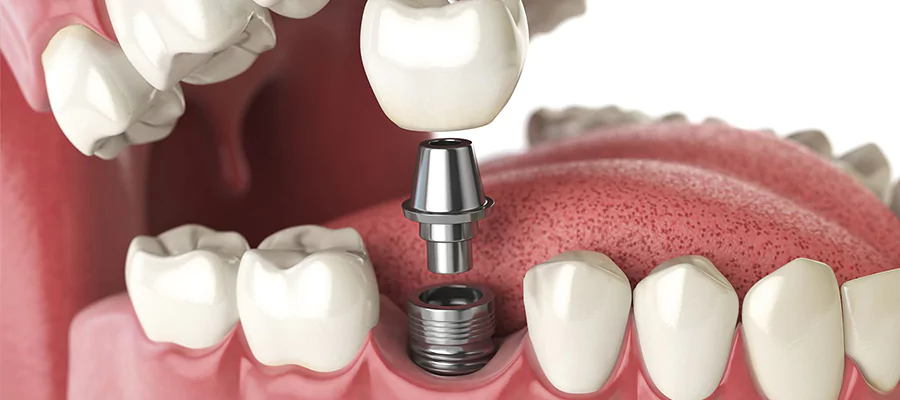
Artificial tooth roots used to replace lost or removed teeth are called dental implants. These tooth roots are usually made of biocompatible materials such as titanium, surgically placed into the jawbone.
Implants are designed to replace missing teeth and have a shape and size similar to natural teeth. The process of making dental implants is as follows. A dentist or oral surgeon evaluates the applicability of dental implants.
Here, more information is gathered about the quality and quantity of the jawbone, oral health, and the patient. Once it is decided to perform the implant, the position and number of teeth to be made are planned.
The treatment plan is prepared in detail until the conditions and sizes of the implants are specified. Implants are placed with a surgical procedure. Under local anesthesia, small incisions are made in the jawbone where the implants will be placed, and the implants are inserted.
İçindekiler Tablosu
Are dental implants lifelong?
Since the longevity of dental implants depends on various factors, it may differ for each patient. Oral hygiene, general health condition, the quality of the jawbone where the implants are placed, and the care of the implants determine their lifespan.
Good oral hygiene practices and regular dental care can extend the life of dental implants. For oral health, brushing, flossing, and dentist check-ups should be done. In addition, general health condition may also determine the lifespan of dental implants.
Many systemic diseases and other factors affecting the oral region are risk factors for implant failure. The jawbone is another factor that can determine the integration and survival time of dental implants.
A strong jawbone will be more durable, while a weak and split jawbone means weaker implant connections. Finally, the care of implants is very important; oral hygiene should be observed, and dental check-ups should be performed as needed.
Do dental implants hurt?
Since local anesthesia is usually applied during dental implant surgery, patients do not feel pain or discomfort during the procedure. The pain or discomfort during and after the placement of dental implants is generally minimal and tolerated by many patients.
However, all patients are different, and each has a different pain threshold, so sometimes the patient may feel more pain or discomfort. In the postoperative period of dental implant surgery, mild pain, swelling, and sensitivity may be felt in the operated area.
These symptoms usually decrease within a few days to a week and can be controlled with painkillers or prescribed analgesics. You will be guided by your dentist or oral surgeon regarding postoperative care and pain management.
For this reason, it is important to follow dental implant surgery instructions properly and to contact your dentist if you experience any pain or complications. This is very important for a comfortable and fast recovery after dental implant surgery.
How long does it take to place 1 implant?
In every case, how the implant is placed will vary depending on the procedure and personal conditions. Implant treatment includes the following: depending on the location, process, and your plan, it consists of the following basic stages.
Evaluation and planning. During a pre-scheduled visit, your dentist or oral surgeon decides where and how it will be placed by looking at the X-ray screen.
Surgical placement. Implants are usually placed individually, and several can also be placed in the same session. The surgical procedure takes place quickly under local anesthesia.
Healing process. Implants can be placed after several months to integrate into the jawbone and heal. Restoration. Once the implants heal, the restoration process is done by the dentist.
The completion time of this treatment may be several years. Both parts are natural to the process. In most cases, the completion time of the procedure is between 3 and 6 months. But in some minor cases, it can be completed in as little as a week.
Do dental implants decay?
Therefore, they do not have enamel or dentin structures and do not decay. These materials are usually titanium or similar biocompatible materials and are resistant to decay.
In other words, it does not mean there is no place for decay or cavities; otherwise, the health and durability of dental implants depend on the gums and jawbone, as well as the patient’s level of oral care.
The gums around the implant, along with regular dental care on both sides, should be maintained properly.
Gum infections or destructive oral diseases can kill the implant’s integrity and damage its surroundings; many implants may fail if left neglected in problematic oral conditions. Keeping your mouth clean and safe and protecting gum health can contribute to the long-term success of your dental implants.
How many sessions does dental implant treatment take?
Dental implant treatment is typically completed over several sessions within a few months. In the first session, the implant is placed into the jawbone. After this stage, it usually takes two to three months for the implant to fuse with the bone. Once healing is complete, in the second session, the abutment, known as the connector piece, is attached to the implant. In the third session, a suitable dental prosthesis is applied to the patient.
Implant treatment usually takes three to six months and requires two to three sessions. However, the patient’s bone structure and healing process may change the duration and number of sessions.
How many days does it take for a dental implant to heal?
The healing time for a dental implant typically varies between 3 to 6 months. After placing the implant into the jawbone, a period is needed for the implant to fuse with the bone or undergo osseointegration. This process is necessary for the implant to be firmly seated in the bone.
In the first few days after surgery, swelling and mild pain may be observed, and healing begins. In general, it is possible to return comfortably to daily routines within seven to ten days. However, the complete fusion of the implant with the bone (the full healing process) takes about two to three months, and this period may be longer depending on the person’s bone structure and overall health.
Which teeth cannot have implants?
In some cases, dental implant treatment may not be applicable, but it is usually an effective option. It may be difficult to place implants in areas without sufficient bone tissue because adequate bone is required to support the implant. Placing implants near the nerves in the lower jaw or the sinus cavities in the upper jaw can also be risky. The success of implants cannot be achieved without first treating severe gum disease.
Implants cannot be placed in children whose jaw development is not yet complete. Uncontrolled diabetes and excessive smoking can also make healing difficult and endanger implant success. In such cases, necessary precautions should be taken before treatment.
How many implants can be placed at once?
The number of implants placed at once depends on the patient’s general health condition, jaw structure, and dental treatment plan. A surgeon can usually place multiple implants in the same session. Placing a single implant is usually a quick procedure, but placing two to six implants at once is also quite common. For full jaw implants, even eight or ten implants can be placed in a single session.
However, whether the patient’s bone structure is sufficient, the healing capacity, and the general health condition determine the number of implants to be placed at once. The patient’s condition determines the surgeon’s plan and the number of implants.
What are the signs of a failed implant?
A series of adverse conditions may appear after treatment as signs of implant failure. Firstly, failure may cause prolonged pain and discomfort after implant placement. Although pain intensity and persistence may be concerning, healing is normal. In addition, if there are signs such as inflammation, swelling, and redness around the implant, it may indicate that the implant has not healed.
The loosening or movement of an implant shows that the implant is not healthy. Extraction of the tooth or visibility of the metal part of the implant indicates a deeper problem. Finally, evidence that the implant has not fully fused with the jawbone includes pain or difficulty while chewing. When these symptoms appear, it is very important to contact the dentist.
Dental implant prices 2025
In 2025, dental implant prices depend on many factors such as the brand and material of the implant used, the experience of the dentist placing the implant, the location of the clinic or center where the treatment is performed, and other factors required for the treatment. Because implant placement usually consists of one or more stages, each stage has a separate cost.