



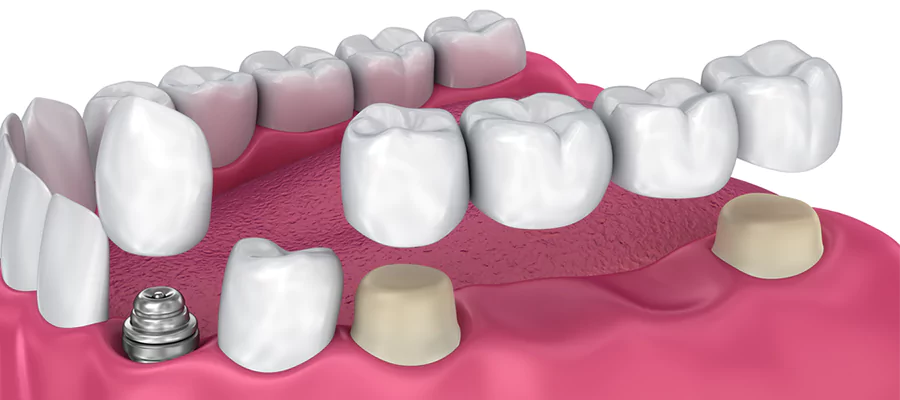
Crown bridge prosthesis is used to fill the gaps between the teeth. It is placed in the area where missing teeth are located and replaces the missing tooth. Generally, crown bridge prosthesis consists of bridge teeth made of durable materials such as ceramic or metal and is fixed by taking support from the adjacent teeth.
These prostheses, which are permanently placed on the patient’s natural teeth, offer both an aesthetic and functional solution. The crown bridge prosthesis method is applied to patients to restore chewing ability, correct the dental arch, and provide an aesthetic smile.
İçindekiler Tablosu
How Is a Crown Bridge Prosthesis Made?
Crown bridge prostheses are used to fill missing teeth and provide an aesthetic appearance. The procedure typically consists of several stages. First, the dentist completes the missing teeth. The adjacent healthy teeth must be reduced during this preparation. Then, the dentist takes intraoral impressions and sends them to the laboratory. In the laboratory, a specially designed prosthesis is made from long-lasting and attractive materials.
Finally, the prepared prosthesis is placed in the mouth by the dentist and fixed appropriately. By filling the missing teeth without damaging the natural teeth, the patient can achieve both an aesthetic and functional smile. This process may vary depending on the patient’s needs and the treatment plan. It is very important to have a comprehensive evaluation with the dentist and obtain information about the treatment process before starting treatment.
Stages of Making a Crown Bridge Prosthesis
Crown bridge prostheses are both a functional and an aesthetic option in cases of tooth deficiency. The preparation of the teeth and the placement of the prosthesis complete this process. The first step is to reduce the teeth to allow the crown to be placed. This is necessary for the prosthesis to be more stable and to fit better.
Then, measurements of the teeth are taken and a custom bridge is designed. This step is carried out precisely to ensure the prosthesis fits exactly on the teeth. In the final stage, after the bridge prosthesis is prepared, it is fixed to the teeth with special adhesives. This provides a successful result both aesthetically and functionally.
Advantages of Crown Bridge Prosthesis
Crown bridge prostheses not only replace missing teeth but also provide numerous benefits. First, they are very important aesthetically. They can be color-matched and designed to be compatible with natural teeth, thus providing an aesthetic smile.
This can help the individual feel more confident and more comfortable in social interactions. In addition, by replacing missing teeth, they restore basic functions such as swallowing, speaking, and chewing. This also makes daily life easier. They protect other teeth as well.
Prostheses are placed in the place of missing teeth to prevent the teeth from shifting and rotating. This maintains the stability of the jaw structure and the balance of the teeth. They also need to be long-lasting and durable. Regular check-ups and proper care can extend their lifespan.
Finally, they are fixed and do not need to be removed, which prevents the patient from worrying while continuing daily activities. Considering these benefits, they are a good option for the treatment of missing teeth.
How to Care for a Crown Bridge Prosthesis?
Caring for crown bridge prostheses is very important to maintain the durability of the prosthesis and oral health. The basis of this care is daily regular cleaning and regular check-ups with the dentist. It is important to clean the prosthesis and its surroundings every day using a toothbrush and dental floss. Cleaning food residues and plaque buildup helps prevent gum diseases and other oral problems.
In addition, using an appropriate toothbrush and dental floss in accordance with the dentist’s recommendations is also important. Regular check-ups with the dentist are important for monitoring the condition of the prosthesis and making adjustments when necessary. Also, avoiding hard and sticky foods and properly storing the prosthesis when removed are important for the long lifespan of the prosthesis.
In line with the dentist’s advice, using appropriate cleaning products to clean the prosthesis is also an important step. All these measures support your oral health by maintaining the durability and functionality of the crown bridge prosthesis.
Crown Bridge Prosthesis Application Process
The crown bridge prosthesis application process generally consists of a series of steps and may vary depending on the person’s dental structure, treatment needs, and the type of prosthesis to be applied. The first step is the dentist’s examination. At this stage, missing or damaged teeth are evaluated, the oral structure is examined, and a treatment plan is created.
If necessary, reshaping is done to prepare the teeth, and measurements are taken. While the permanent prosthesis, specially prepared in the laboratory, is being made, a temporary prosthesis may be attached. When the permanent prosthesis is ready, it is placed in the mouth and fixed by the dentist.
After this stage, the fit of the prosthesis is checked and necessary adjustments are made. The person is given information about the care and use of the prosthesis, and appointments for regular check-ups may be planned. The crown bridge prosthesis application process is a procedure that requires careful planning and implementation, and following each step meticulously helps achieve a successful result.
In Which Situations Is It Preferred?
It is generally preferred in cases of tooth deficiency. This type of prosthesis can be used to meet both the functional and aesthetic requirements of the teeth. Especially in cases where one or several teeth are missing, it replaces the missing teeth to provide an aesthetic smile and natural chewing. They can also be used to reduce bone loss and changes in the jaw structure that may occur after tooth loss.
It is an ideal aesthetic correction method to correct aesthetic problems such as shape irregularities in the teeth, discolorations, or gaps. Crown bridge prostheses supported by implants are an excellent option for replacing missing teeth in areas where implants are used.
Dentists evaluate the person’s special conditions and needs to determine the most appropriate treatment options. As an example, dentists may recommend them. In this way, the person’s functional and aesthetic requirements are met in the best way.
Types and Features of Crown Bridge Prostheses
Crown bridge prostheses are a treatment method used in cases of tooth deficiency. These prostheses aim to replace the teeth structurally, aesthetically, and functionally. They are generally preferred when one or more teeth are missing and are custom-designed by the dentist.
Crown bridge prostheses can be made of zirconia, acrylic, porcelain, or metal-alloy porcelain. Materials such as zirconia combine durability and aesthetics, while porcelain veneers resemble the natural tooth color. In addition, hybrid crown bridge prostheses combine durability and aesthetic appearance by using a mixture of different materials. Dentists recommend and apply crown bridge prostheses according to the person’s needs and preferences. While replacing missing teeth, these prostheses restore chewing ability.
Things to Know Before Getting a Crown Bridge Prosthesis
Important information to know before getting it will help you understand the treatment process and make the right decision. At the forefront of these points is talking to your dentist and thoroughly evaluating the condition of your missing teeth. Your dentist will evaluate various options to determine the most suitable treatment option for you and will provide detailed information about the process.
In addition, it is very important to find out how much the treatment will cost and the insurance coverage. The cost of treatment and the support of insurance can play an important role in your decision-making process. After the application, protecting dental health is important.
For your teeth to be long-lasting, you should perform regular cleaning and maintenance and see your dentist regularly. In this way, it is possible to maximize the crown bridge prosthesis treatment and achieve long-term successful results.
Reviews from Those Who Have Had a Crown Bridge Prosthesis
Reviews and evaluations may vary from person to person but are generally positive. It is an aesthetic solution for replacing missing teeth. Users say that the prostheses resemble natural teeth and beautify their smiles. It is also emphasized that prostheses can be used for many years if proper care and cleaning are performed.
However, some users state that time is needed to get used to the prostheses and that they experienced some discomfort. Therefore, it is very important for people considering a crown bridge prosthesis to receive detailed information from their dentists and to manage the treatment process appropriately.
Recovery Process After Treatment
It usually heals quickly and smoothly. However, since each patient is different, the recovery process may vary for each patient. In the first days after treatment, there may be sensitivity, pain, and slight swelling, but these are usually temporary. Painkillers and other medications recommended by your dentist can alleviate these problems.
The process of getting used to your prosthesis is very important during recovery. You may feel some discomfort with your prostheses at first, but over time you will get used to them and be able to eat and speak normally.
Your dentist will teach you how to clean and protect your prostheses. For long-term use, it is very important to clean and maintain your prostheses regularly. Also, do not miss the regular check-ups recommended by your dentist; these are very important to monitor the condition of your prostheses and make necessary adjustments.
For most patients, it goes smoothly and they can quickly return to their normal lives. However, in case of excessive pain, swelling, or other discomforts, it is very important to consult your dentist immediately.
Differences Between Crown Bridge Prosthesis and Other Dental Prostheses
There are many differences between other dental prostheses and crown bridge prostheses. Crown bridge prostheses are placed on the healthy teeth adjacent to the missing teeth. When placed on healthy teeth, they are more robust and long-lasting. They are also known for having an aesthetic appearance similar to natural teeth.
Other dental prostheses fill the place of missing teeth directly with prosthetic teeth. They may be less durable and sometimes less natural-looking than crown bridge prostheses. Unlike other dental prostheses, crown bridge prostheses are not removable and separately cleaned; they can be brushed and cleaned with dental floss like natural teeth.
When choosing, you should consider your needs, cost, durability, and appearance. As a result of consultations with your dentist, it is recommended that you determine the best option by evaluating these factors.
Crown Bridge Prosthesis Prices 2025
Crown bridge prosthesis prices may vary depending on the services offered by dentists, dental clinics, or health centers and the materials used.
Crown bridge prosthesis prices are affected by many factors such as the number of teeth on which the prosthesis will be made, the material, the clinic, or the experience and location of the dentist.