



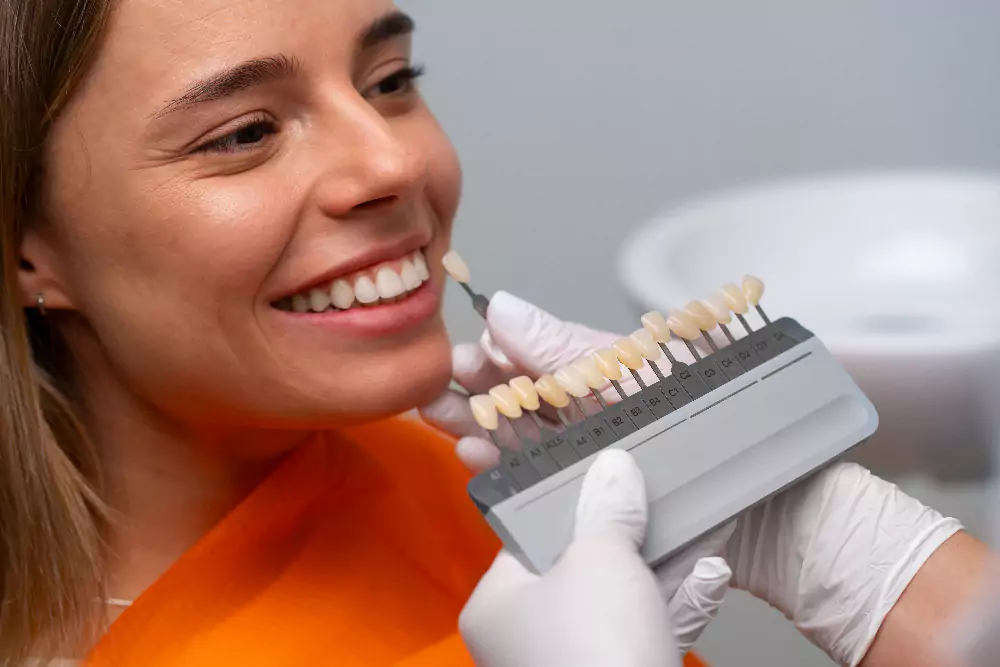
Damaged or aesthetically problematic teeth can be restored using porcelain crowns. These crowns completely cover the natural structure of the tooth, providing both protection and an enhanced appearance. In their construction, porcelain crowns are usually applied over a metal or zirconium base. Generally, a porcelain crown resembles the appearance of a natural tooth and at the same time improves the tooth’s functionality and aesthetics.
This treatment method is preferred for protecting weakened teeth after root canal treatment, repairing decayed or broken teeth, or reshaping teeth for cosmetic purposes. Porcelain crowns are notable for being durable and long-lasting. Thanks to their color harmony, they create a natural unity with the other teeth.
However, in cases of gum recession over time, metal-supported porcelain crowns can form a metal line. Porcelain crowns can also be delicate, which is why they should be used with care. Before having porcelain crown treatment, it is important to determine your dental structure and aesthetic needs. Proper care allows porcelain crowns to be used comfortably for many years.
İçindekiler Tablosu
How is porcelain crown treatment performed?
Porcelain crown treatment is applied to preserve the natural structure of the tooth, strengthen it, and provide an aesthetic appearance. This treatment is typically carried out in several stages and, with proper planning, can be completed in two to three sessions.
The first task of the dentist is to prepare the tooth for treatment. This is done by cleaning cavities and repairing broken or damaged areas. For the porcelain crown to be placed, the tooth must be reduced to a certain thickness. At this stage, local anesthesia is usually used to reduce pain.
After the preparation, an impression of the tooth is taken. In the laboratory, this impression ensures that the tooth is covered with a perfectly fitting porcelain crown. Advanced methods or digital scanning may also be used during this process. During the laboratory phase, the tooth is protected with a temporary crown.
In the second session, the laboratory-made porcelain crown is placed on the tooth. The dentist checks its compatibility and color, making the necessary adjustments. If everything is compatible, the crown is fixed to the tooth with a special adhesive. This ensures that the porcelain crown remains properly fitted and securely in place for a long time.
After the treatment, the patient can return to daily life comfortably. To ensure the long lifespan of the porcelain crown, regular brushing, flossing, and dental check-ups are very important. This treatment provides both functional and aesthetic solutions, giving a natural smile.
In which cases are porcelain crowns applied?
Porcelain crowns are applied when there is significant damage, decay, or aesthetic problems in the teeth. When teeth become very weak due to decay, crowns preserve the structure and function of the tooth. Additionally, in cases of broken or cracked teeth, porcelain crowns restore the strength of the tooth. People who wish to improve the color or shape of their teeth for aesthetic reasons also choose porcelain crowns. They can also be used to provide a natural appearance in teeth aligned after orthodontic treatment. Furthermore, they may be applied to correct shape deformities caused by gum disease.
Who are suitable candidates for porcelain crowns?
Suitable candidates for porcelain crowns are people with significant dental damage or aesthetic concerns. Decayed or broken teeth are strengthened and protected with porcelain crowns. In addition, individuals who want to correct the color or shape of their teeth for aesthetic reasons can also benefit from this treatment. Those who want a natural appearance after orthodontic treatment may also choose porcelain crowns. People who want to correct shape deformities caused by gum disease are also among suitable candidates. Having healthy gums is important for the success of porcelain crown treatment.
Your dentist will evaluate the condition of your teeth and determine whether porcelain crowns are suitable for you. This treatment provides long-lasting solutions both aesthetically and functionally, making your smile more attractive.
Advantages of porcelain crowns for severely damaged teeth
For severely damaged teeth, porcelain crowns offer significant advantages in restoring the tooth’s function and aesthetics. Since porcelain material is similar to natural tooth color, it provides excellent aesthetic harmony. Its durable structure offers long-lasting protection and restores chewing function. In addition, since they are designed to be compatible with the gums, a natural and aesthetic appearance is achieved. Your dentist places the crown in the most suitable way for your tooth structure, giving you both a healthy and attractive smile. This treatment eliminates the causes of damage to the tooth while also addressing aesthetic concerns.
Which problems can be corrected with porcelain crowns?
Porcelain crowns correct many aesthetic and functional problems in the teeth, resulting in a healthy and beautiful smile. Decayed or damaged teeth are strengthened with porcelain crowns, preserving chewing function. In addition, broken or cracked teeth are repaired with porcelain crowns, restoring the structure and aesthetics of the tooth. Shape irregularities and misalignments of the teeth are also corrected with porcelain crowns, providing a more symmetrical and attractive appearance.
Because porcelain coverings are in natural tooth color, they offer excellent aesthetic results and create a harmonious look with the gums. Shape deformities caused by gum disease can also be corrected with porcelain crowns, resulting in a healthy oral structure. This treatment improves dental health both functionally and aesthetically, while also increasing self-confidence. Your dentist will plan porcelain crown treatment suitable for your needs to ensure the best results.
The role of porcelain crowns in the smile design process
In the smile design process, porcelain crowns play an important role in perfecting the teeth both aesthetically and functionally. With porcelain crowns, the shape, color, and alignment of the teeth can be improved to achieve a natural and balanced appearance. These crowns repair decayed or broken teeth while also helping to achieve an aesthetically pleasing result in harmony with the gums.
The translucency of porcelain material gives teeth a realistic whiteness, making the smile look brighter. In addition, porcelain crowns offer long-lasting solutions thanks to their durability and protect teeth during daily chewing activities. The use of porcelain crowns in smile design increases self-confidence while providing aesthetically satisfying and natural results.
The effect of porcelain crowns on chewing and speaking
They have positive effects on chewing and speaking because they restore the natural functions of the teeth. Porcelain material is strong and durable, protecting the teeth during daily chewing activities. Since they are in natural tooth color, they provide an aesthetic appearance while speaking and do not affect tone of voice.
As they fit perfectly with the tooth structure, they provide a comfortable chewing experience. In addition, since they do not cause sensitivity, there is no discomfort during speech. Thanks to these features, porcelain crowns offer satisfactory results both functionally and aesthetically.
How long do porcelain crowns last?
Their lifespan is usually between 10 and 15 years, but it can be longer depending on your care. Proper maintenance increases the durability of the crowns and ensures long-term use. Paying attention to the oral hygiene recommended by your dentist prevents damage to porcelain crowns. Avoiding hard foods and protecting your crowns extends their lifespan.
In addition, regular dental check-ups detect potential problems early and allow intervention. The quality of the porcelain material and the experience of your dentist also affect how long crowns will last. Aesthetically and functionally, porcelain crowns can be used without problems for many years with proper application and care.
Care recommendations for long-term use of porcelain crowns
Care recommendations for long-term use extend the lifespan of your crowns and maintain their health. First, regular brushing and flossing prevent plaque build-up. Avoiding hard foods prevents cracks and increases durability. In addition, using special toothpastes recommended by your dentist protects your gums and crowns. Avoiding heavily staining foods and drinks prevents discoloration. Regular dental check-ups help detect potential problems early and allow intervention. Avoiding bad habits such as smoking is also important to protect your crowns. 
Is pain felt during porcelain crown application?
Pain is generally not felt during porcelain crown application because the procedure is performed under local anesthesia. Anesthesia numbs the gums, ensuring that you do not feel discomfort. During the procedure, you may feel slight pressure or vibration, but no pain. Your dentist takes all necessary measures to ensure your comfort. Mild sensitivity may occur after the procedure, which is normal and temporary.
To reduce this sensitivity, it is useful to use the products recommended by your dentist. In addition, using soft toothbrushes and brushing gently helps reduce sensitivity. In general, porcelain crown application is a painless and comfortable experience, and the aesthetic results are satisfying.
How long does sensitivity and discomfort last after the procedure?
Sensitivity and discomfort after the procedure usually last between a few days and two weeks, but this may vary from person to person. This sensitivity is caused by mild irritation of the tooth enamel or gums during treatment. In the first few days, you may feel slight discomfort in your teeth; this is normal and decreases over time. During the healing process, following your dentist’s recommendations for desensitizing toothpastes and special care helps relieve discomfort quickly.
In addition, avoiding extremely hot or cold food and drinks supports the reduction of sensitivity. If sensitivity does not go away within a few weeks, you should contact your dentist to evaluate additional solutions. In general, sensitivity and discomfort after the procedure disappear in a short time with proper care and attention, allowing your teeth to heal healthily and comfortably.
How many sessions does porcelain crown treatment take?
Porcelain crown treatment is usually completed in two to three sessions. In the first session, the tooth is prepared and impressions are taken. These impressions are sent to the laboratory for production. In the second session, temporary crowns are placed, and when the crowns are ready, they are fitted in the third session. In some cases, additional sessions may be required, especially if there are complex adjustments to the tooth structure. In each session, your dentist works meticulously to achieve the best aesthetic and functional results. Throughout the treatment process, your comfort and satisfaction are prioritized. Thanks to a professional approach, they are achieved naturally and durably. In this way, you gain a long-lasting and aesthetic smile.
Porcelain crown prices 2025
Porcelain crown prices vary depending on the quality of the material used. High-quality porcelain materials provide more aesthetic and durable results, which can increase costs. The complexity of the treatment process and the number of required sessions can also affect the price. Porcelain crown prices are an important investment in your dental health and aesthetic appearance.