



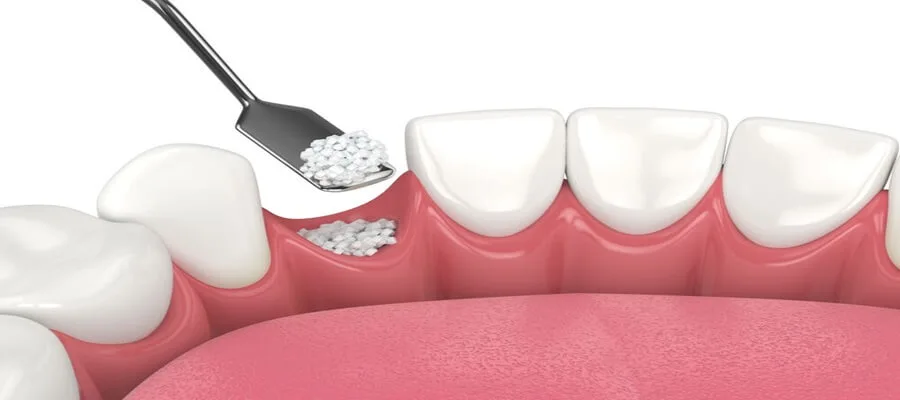
Bone Augmentation for teeth is a bone enhancement procedure performed when there is not enough bone tissue in the jaw to place a dental implant. This procedure is done to provide the amount of bone necessary for the implant to anchor securely. The jawbone can resorb over time, especially after tooth loss; in such cases, bone augmentation helps reconstruct the missing bone.
Generally, bone grafts taken from the patient’s own body or biocompatible materials are used, thereby supporting the formation of natural bone tissue. The success of this procedure is critically important for the long-term durability of the implant.
İçindekiler Tablosu
How Is Bone Augmentation Performed?
Dental bone augmentation is performed by placing additional bone tissue into the jaw to compensate for the missing bone volume. First, the bone graft to be used during the procedure is determined; this graft can be obtained from the patient’s own body, synthetic biocompatible materials, or animal sources. Under local anesthesia, the surgeon opens an area in the jawbone and carefully places the graft, securing it to adapt to the tissue.
Then, a healing period of several months is required for the bone graft to integrate with the natural bone and strengthen. Once this process is complete, the bone tissue becomes strong enough to support the implant, making it ready for implant placement.
Bone Augmentation Methods
Bone augmentation methods offer different techniques to provide sufficient bone tissue for dental implants.
One of the most common methods is bone grafting; here, grafts taken from the patient’s own body or from biocompatible materials are added to the jawbone.
Sinus lifting is another technique used to increase bone volume in the upper jaw region; in this procedure, the sinus floor is elevated and a bone graft is placed into the created space.
The ridge expansion method, on the other hand, is used to widen thin bone tissue and is particularly effective in narrow jawbones.
The choice of each method is determined according to the patient’s bone structure and needs, thus preparing an ideal foundation for the implant.
Post-Surgical Healing Process After Bone Augmentation
The healing process after bone augmentation surgery can vary depending on the patient’s overall health, the extent of the surgery, and the graft material used. Nevertheless, typically, this procedure consists of the following stages:
- Immediate Postoperative Period (First Week): In the first days after surgery, the patient may experience swelling, pain, and slight bleeding. Relief is provided by using the medications and painkillers recommended by the doctor. Cold compresses can also be used to reduce swelling at the surgical site.
- Healing Period (First Few Weeks): After surgery, the bone graft material and the surgical area heal over several weeks. During this period, the patient should keep the wound area clean and use an antibacterial mouthwash. Avoiding hard and hot foods is also beneficial for healing.
- Intermediate Period (First Few Months): The bone graft and surrounding tissues heal and the integration of the bone tissue begins. It is very important to attend the follow-up appointments recommended by the doctor during this period. If necessary, diets, medications, and other treatments can be adjusted to speed up healing.
- Complete Healing (After Several Months): In general, complete healing may take several months. At this stage, full integration of the bone tissue and attainment of the desired bone volume are expected. The patient is allowed to return to daily life and to proceed with implant or other dental procedures.
The patient’s personal health status and the complexity of the surgical intervention affect the postoperative healing process. Consequently, it is very important to adhere to the surgical team’s follow-ups and recommendations. In the event of any problem or complication, a doctor should be consulted immediately.
How Long Is Bone Augmentation Effective?
After a successful application, bone augmentation is generally long-lasting, because the added bone tissue fuses with the natural bone and becomes stable. The bone graft or biocompatible materials used in this process gradually merge with the body’s own bone tissue, transforming into a natural structure. However, the long-term effect of augmentation depends on the person’s bone health, oral care, and general health condition.
Good oral hygiene and regular dental check-ups contribute to the health of the augmentation area. Factors such as smoking or teeth grinding can strain the bone structure and negatively affect effectiveness.
Post-Procedure Considerations
Post-procedure considerations are very important for accelerating the healing process and reducing the risk of infection. First, applying a cold compress to the surgical area helps alleviate potential swelling and pain. Especially during the first 24 hours, avoiding hot foods and consuming soft foods will allow for nutrition without damaging the area. Paying attention to oral hygiene is essential; however, care should be taken not to traumatize the treatment area, and gentle rinses or antiseptic solutions recommended by the doctor should be used. Smoking and alcohol should be avoided during this period as they negatively affect healing and should be discontinued.
Finally, not missing regular doctor check-ups plays a key role in preventing possible complications after the procedure and ensuring a healthy healing process.
Who Are Suitable Candidates for Bone Augmentation?
Suitable candidates for bone augmentation are individuals who lack sufficient jawbone tissue and are generally in good health. In people who have experienced long-term tooth loss, resorption may occur in the jawbone, and therefore jawbone augmentation may be necessary. Those who have suffered bone loss due to disease or trauma are also suitable candidates for this procedure. Augmentation can be applied to individuals with chronic diseases such as diabetes under control; however, their healing should be monitored more carefully. Individuals who pay attention to oral hygiene and do not smoke can achieve better and more lasting results after the procedure.
Factors Affecting Bone Augmentation Surgery
Among the factors affecting bone augmentation surgery are the patient’s general health status, the quality of the bone structure, and lifestyle habits. For a healthy healing process, the patient’s immune system should be strong, and chronic diseases such as diabetes should be kept under control. Bone quality directly affects the success of the surgery; in bones with low density or a tendency to resorb, the process should be planned more carefully. Smoking negatively affects bone healing and increases the risk of infection, so quitting before surgery is recommended. In addition, paying attention to oral hygiene after surgery accelerates the healing process and reduces the risk of complications.
Differences Between Sinus Lifting and Bone Augmentation
Sinus lifting and bone augmentation are two different procedures performed to strengthen the jawbone, but the areas they target and the techniques they use differ. Sinus lifting is performed specifically in the upper jaw region to increase the bone tissue beneath the sinus cavities. In this procedure, the sinus floor is elevated and a bone graft is placed into the space, thereby providing the height necessary for the implant.
Bone augmentation, on the other hand, is performed in various regions of the jaw when there is insufficient bone; in cases such as tooth loss, trauma, or bone resorption, the missing bone tissue is completed. Both procedures create a solid foundation for implants, but sinus lifting is a procedure specific to the upper jaw.
Is Bone Augmentation Surgery Painful?
Bone augmentation surgery is performed under local anesthesia and the area is completely numbed. Mild pain or discomfort after the surgery is normal; however, painkillers are usually prescribed. There may be swelling or tenderness in the first days, but these subside in a short time. Additionally, healing is more comfortable when the doctor’s care and rest instructions are followed. Although postoperative pain varies according to the individual’s pain threshold, it generally decreases in a short time and it is possible to return to daily life.
What Materials Are Used in Bone Augmentation?
In bone augmentation, various biocompatible materials are used to support the natural bone tissue. The most commonly used material is an autograft; this is bone tissue taken from the patient’s own body and is the option with the lowest risk of incompatibility. Alternatively, bone tissue taken from another human, called an allograft, is also used and has been made biologically compatible.
Animal-derived bone materials are known as xenografts and are highly effective in terms of biological compatibility. In addition, synthetic grafts (alloplastic materials) can also be used to support the jawbone; these materials contain calcium-based substances that support bone development. The material used is determined according to the patient’s bone structure and the needs of the procedure.
Bone Augmentation Prices 2025
Bone augmentation prices can vary depending on a number of variables. Examples include the complexity of the area to be treated, the techniques used, the types of materials employed, and the surgeon’s experience.
The bone augmentation procedure is typically planned as part of implant therapy and therefore constitutes a component of the overall implant treatment cost. The bone augmentation procedure generally requires additional expense and affects the total cost of implant treatment. Consequently, bone augmentation prices are determined by considering the requirements of the treatment and its overall complexity.