



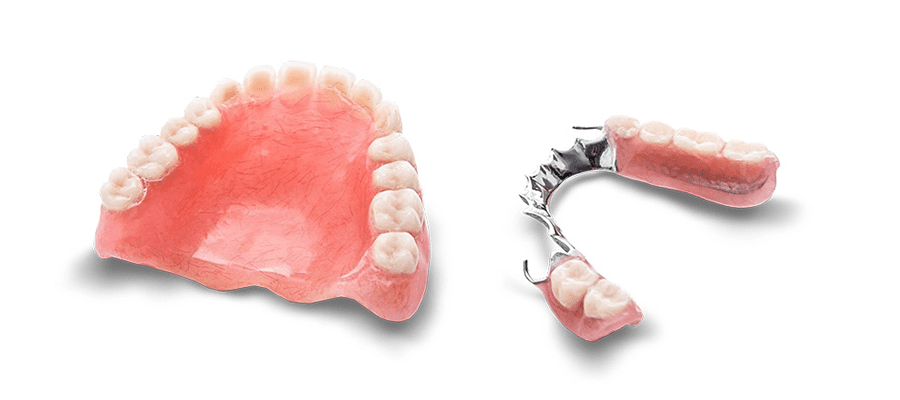
Removable dentures are used to replace missing teeth or provide support to an edentulous area. These dentures are placed in the patient’s mouth and fit onto the natural teeth or gums. Complete dentures and partial dentures form the two main categories of removable dentures.
- Complete Dentures: Complete dentures are used in cases where all upper or lower teeth are missing. These dentures fit onto the gums by creating a vacuum in the lower or upper jaw. Complete dentures help the patient regain the ability to smile, speak, and eat.
- Partial Dentures: Partial dentures are used when one or more teeth are missing in the mouth. Artificial teeth are mounted on a metal or acrylic base to support the other teeth. Partial dentures create balance in the mouth by replacing missing teeth and improve chewing ability.
For edentulous individuals, removable dentures are both an aesthetic and functional solution. However, regular maintenance and adjustments may be required to ensure proper fit and comfortable use of the dentures. Before using such dentures, it is advisable to consult and be evaluated by a dentist or a prosthetics specialist.
İçindekiler Tablosu
How Are Removable Dentures Applied?
It typically requires a meticulous procedure consisting of several steps. First, a dentist or removable prosthetics specialist examines and evaluates the patient. At this stage, the patient’s oral structure, the condition of the gums, and the placement of the missing teeth are assessed. Then, appropriate measurements are taken to ensure the denture fits properly.
These measurements allow the denture to be designed in the most suitable way for the patient’s mouth. After the design of the denture is completed, the patient moves on to the testing phase. In this phase, the fit, comfort, and functionality of the denture are tested and appropriate adjustments are made. Finally, the patient receives comprehensive training on denture use and care.
Proper care and cleaning ensure long-term use of the denture. This process is customized according to the patient’s oral structure and needs, enabling the denture to be used effectively and comfortably.
Advantages and Disadvantages of Removable Dentures
Removable dentures that replace missing teeth provide both a functional and aesthetic solution. Thanks to these dentures, the patient regains a natural smile and the ability to speak, becoming more confident. In addition, by improving chewing ability, they can enhance dietary habits.
Compared to other dental treatment options, removable dentures are generally inexpensive. However, there may be initial issues with comfort and adaptation. Therefore, patience is required for the denture to be placed correctly and for the patient to get used to it.
They can also cause oral diseases if regular cleaning and care are not performed. Depending on the patient’s needs and preferences, removable dentures can be an appropriate option.
Types and Varieties of Removable Dentures
Complete dentures and partial dentures are the two main categories under which removable dentures can be examined. Common features of both classes are as follows:
- Complete Dentures: Complete dentures are used when there are no upper or lower teeth in the mouth. These dentures provide both an aesthetic and functional solution for people with complete tooth loss. Upper complete dentures replace missing teeth in the upper jaw, and lower complete dentures replace missing teeth in the lower jaw. They generally consist of artificial teeth placed on an acrylic base and provide support by fitting onto the gums.
- Partial Dentures: They are used in cases where one or more teeth are missing in the mouth. Artificial teeth are placed on a metal or acrylic base to support the other teeth. Partial dentures create balance in the mouth by replacing missing teeth and improve chewing ability. In addition, they are more durable by being attached to other teeth with metal components.
Depending on the materials used, the shape, and the technology by which they are made, removable dentures are divided into two main groups: complete and partial. There are modern and advanced denture options such as hybrid dentures or implant-supported dentures. Thanks to this variety, a denture suitable to the patient’s preferences and needs can be selected.
How to Care for Removable Dentures?
Regular care of removable dentures is very important. Implementing these care procedures ensures the denture is used in a long-lasting and healthy way. First, after each use, you should thoroughly wash the denture with warm water and soap or a denture cleanser. Hard brushes or abrasive substances should not be used when cleaning the denture.
This is because they have the potential to scratch or damage the denture. Then it is very important to keep the denture in a moist place overnight. For this, storing the denture by soaking it or covering it with a damp cloth may be appropriate. Regular check-ups by a prosthetics specialist or dentist are also important.
These check-ups verify the compatibility and integrity of the denture, make corrections if necessary, and intervene if any problems arise. If a partial denture is being used, it is very important to brush the remaining teeth and gums regularly and use dental floss. This preserves the health of the tissues around the mouth and the denture.
Finally, if any breakage, cracking, or deformation is noticed in a denture, you should consult a dentist immediately. Timely repairs ensure the denture’s longevity and prevent additional problems. Regularly implementing these basic care procedures preserves the health and durability of the removable denture.
How to Clean a Removable Denture?
Regular cleaning is very important to maintain the denture’s hygiene and oral health. First, for cleaning a removable denture, gently clean it using warm water and a soft-bristled toothbrush. Hard brushes can scratch or damage the denture. After cleaning the denture, rinse thoroughly with soap or a special denture cleaner.
Keeping the denture in a moist environment overnight prevents oral dryness and deterioration. For this, soaking the denture in water or a special denture storage solution can be a good option. You can perform a deeper clean once a week using special denture cleaners or cleaning tablets to eliminate microorganisms.
Regular check-ups by a dentist or prosthetics specialist are important to keep the denture healthy and well-fitting. Follow these steps to keep it clean and healthy.
Use and Adaptation Process of Removable Dentures
How it is used and adjusted may vary from person to person, but there are generally a few important stages. First, the removable denture must be placed properly in the mouth. At this point, it is very important for the denture to be comfortable and in the correct position. When the denture is first worn, the user may need some time to get used to it and feel it.
Patience is vital during the adaptation process. After starting to use the denture, issues such as discomfort in the mouth, speech problems, or difficulty chewing may arise. However, as the user continues to use the denture, these problems generally decrease.
Frequent use of the denture can speed up the adaptation process. To make it easier for users to get accustomed, they can start by using the denture for a few hours a day and increase the usage time over time.
Cleaning and maintenance of the denture are also very important during the adaptation process. Regular check-ups and cleanings by the dentist may be necessary to help the user adapt better to the denture.
In conclusion, personal experiences determine how a removable denture will be used and adjusted, but with patience, regular use, and proper care, you can get through this process more easily.
Who Is Removable Denture Treatment Applied To?
Removable dentures are a suitable option for people experiencing tooth loss or edentulism and who are not suitable for fixed dentures. By replacing missing teeth, this treatment provides both a functional and aesthetic solution.
Removable dentures are also a common application for those who have lost their teeth or have suffered severe damage to their teeth. They are especially used by older individuals. However, removable dentures can also be applied particularly to young and middle-aged people who have lost their teeth or need dentures due to gum disease.
It is an ideal option for treating edentulism or missing teeth. However, decisions regarding this treatment method should be made after a comprehensive evaluation consisting of a number of factors such as the person’s overall health status, oral structure, gum health, and the condition of the teeth. This evaluation should be conducted by a dental prosthetics specialist or a dentist.
Differences Between Removable and Fixed Dentures
There are two different types of dentures used in the treatment of missing teeth: removable dentures and fixed dentures. Fixed dentures are prostheses that cannot be removed from the mouth and are permanently fixed in place of the teeth. These dentures, which are usually made using natural teeth or implants, provide a more natural appearance aesthetically.
In addition, fixed dentures are generally better for chewing and easier for daily care. In general, removable dentures are prostheses that are not fixed in the mouth with retainers or tissue supports and can be removed when necessary. Complete or partial dentures replace missing teeth.
Compared to fixed dentures, removable dentures may generally appear less natural and may have different chewing capabilities. However, these types of dentures can be suitable for every patient and situation, so it is important to talk to a dentist or prosthetics specialist to determine the best option.
Stages of Making a Removable Denture
In general, the stages of making a removable denture involve specific steps to create a denture suitable for the patient’s oral structure. First, the dentist examines the patient’s oral and dental health. The patient’s general health, gum health, existing teeth, and tooth deficiencies are evaluated. The patient’s expectations and needs are also taken into consideration. Then, measurements are taken to accurately replicate the patient’s oral structure.
The dentist takes these measurements by making an impression from inside the mouth. This step is very important to ensure the denture fits perfectly in the mouth. The measurements taken create a model of the patient’s oral structure. This model checks the design and fit of the denture. In addition, it ensures that the denture is designed to meet the patient’s aesthetic and functional requirements. During the preparation of the denture, necessary adjustments are made, and the patient evaluates the compatibility and comfort of the denture in trial sessions. When the denture is completed, it is delivered to the patient and instructions for use are provided. After this, the stages of making a removable denture are completed.
What Is a Removable Partial Denture?
Being removable and insertable, a removable partial denture is used to fill the place of missing teeth in the mouth. These dentures are stabilized around the natural teeth with metal or acrylic clasps and sometimes with precision attachments in the mouth. They are ideal especially for those with several missing teeth and can be removed daily. Cleaning and maintenance are easy with removable partial dentures because the user can easily insert and remove them. The denture is stabilized with clasps placed around the natural teeth. These clasps can be metal or acrylic. Precision attachments are used in some dentures to increase aesthetics and comfort. Thanks to these attachments, the denture fits better and moves less. It is designed to restore the appearance of missing teeth and chewing ability.
The teeth resemble natural teeth. Regular check-ups by a dentist and making necessary adjustments are very important to make the dentures comfortable and compatible. The patient’s quality of life improves with these dentures, solving the functional and aesthetic problems of missing teeth. For long-lasting and healthy use, these dentures should be maintained and cleaned regularly.
How Is Planning Done for a Removable Partial Denture?
Planning for a removable partial denture is a process to determine the most appropriate treatment plan by thoroughly examining a patient’s oral structure. First, the dentist conducts an in-depth assessment of the patient’s oral and dental health. The patient’s general health, gum diseases, tooth deficiencies, and other intraoral problems are examined. The patient’s needs and expectations are also taken into account. Then the dentist examines the inside of the patient’s mouth. The jaw structure, dental health, and the condition of the gums are checked. Then, measurements are taken to accurately replicate the patient’s oral structure. These measurements are required for the denture to fit correctly and comfortably. The measurements taken create a model of the patient’s oral structure. This model checks the design and fit of the denture. In addition, it helps design the denture both aesthetically and functionally to meet the patient’s needs.
Considerations When Choosing a Removable Denture
First, the condition of oral health should be evaluated. Problems such as gum disease or intraoral infections may negatively affect the fit of a removable denture. The state of tooth loss should also be considered; different denture options are available for complete or partial edentulism.
Aesthetic preferences are also important. It is important for the denture to look natural and for the user to feel comfortable. In addition, the functional expectations of the denture should be taken into account. Since the denture will affect chewing function and the ability to speak, it is important that it does not hinder daily activities and provides comfortable use.
Ease of maintenance and cleaning should also be considered. Since the denture needs to be cleaned and maintained regularly, it is important that this process can be carried out easily. Finally, the cost of the denture should also be evaluated. The cost may vary depending on the material used, the complexity of the denture, and other factors.
Considering all these factors, it is important to consult a dentist or a dental prosthetics specialist to determine the most suitable removable denture option. These experts can create the most appropriate treatment plan for the person’s specific situation and needs, helping to achieve healthy and satisfactory results.
User Reviews and Evaluations About Removable Dentures
User reviews and evaluations are mostly based on personal experiences and may vary from person to person. However, most people who have had removable dentures state that this treatment is satisfactory both aesthetically and functionally. Many people say they are pleased that the denture provides a natural appearance without hindering daily activities such as chewing and speaking.
However, some users have noted that, at first, a process is required for the removable denture to fit their mouths. Some have also said that cleaning and maintenance of the denture are very important. Such feedback is something that those who want to use removable dentures should take into account.
User reviews and evaluations can be a useful resource for potential removable denture users, but since everyone’s experiences are different, it is important to speak individually with a dentist or dental prosthetics specialist rather than relying solely on these reviews. These experts can help determine the treatment option most suitable for the person’s condition and needs.
Who Uses Removable Dentures?
People with missing teeth are those who use removable dentures. These dentures are stabilized in the mouth after being placed around the natural teeth and restore chewing ability. People who have lost all their teeth use complete removable dentures. Thanks to these dentures, they can continue their daily lives by replacing the teeth both aesthetically and functionally.
They are also a suitable option for people who cannot have implants due to financial reasons. These dentures solve the functional and aesthetic problems caused by tooth loss and are also more affordable. With regular check-ups, they can be used for a long time and significantly improve patients’ quality of life.
How to Remove a Removable Denture?
In general, removing a removable denture is extremely easy and should be part of your daily cleaning routine. First, wash your hands thoroughly. This is very important to prevent contaminating your mouth and dentures. After cleaning your hands, you can remove the denture. To remove upper dentures, use your thumb and index finger. Follow the same procedure for lower dentures, although removal is generally easier.
If your dentures fit tightly, try loosening them by gently rocking them. Avoid using too much force when pulling, as this can cause the denture to break or damage your mouth. After removing the dentures, it will be beneficial to rinse them with clean water and leave them in a denture cleaning solution overnight. This allows your gums to rest overnight and keeps your dentures clean.
If you experience any discomfort or problems when removing your dentures, it is very important to consult your dentist. Your dentist can teach you several ways to remove your dentures safely and easily. To maintain oral health, it is very important to clean your dentures regularly and remove them correctly.
How Many Days Does It Take to Make a Removable Denture?
In general, the production time may vary depending on the patient’s oral structure and the results of the examination performed by the dentist. In the first step, the dentist examines the patient’s oral structure and takes measurements. This process usually requires one or two visits. At the first visit, the patient’s oral health is assessed and molds are prepared for measurements. A model is made in the laboratory in line with the measurements taken, and a try-in is performed to check whether it is suitable for the patient. In general, making a removable denture typically can take 5 to 7 days. After the model is approved, the final form of the denture is prepared and necessary adjustments are made. The denture is usually completed within a few weeks and delivered to the patient.
Removable Denture Prices 2025
In general, the prices of removable dentures can vary depending on many factors. These include the type of material used, the complexity of the denture, the place where the treatment is performed, and the experience of the dentist or dental prosthetics specialist.
By consulting a dentist or a dental prosthetics specialist, you can obtain more information about a specific treatment plan and costs. For information about removable denture prices 2025, you can contact us.