



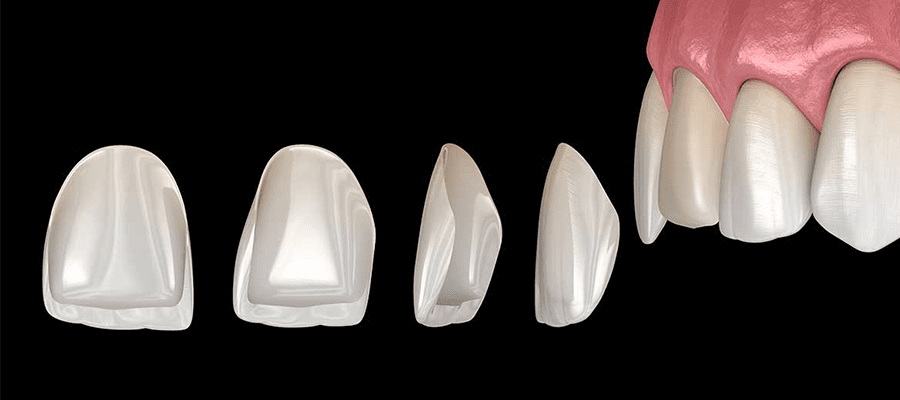
Porcelain Laminates are thin, custom-designed porcelain veneers used to create dental aesthetics and an improved smile. These veneers are placed on the front surface of the teeth and help correct aesthetic issues such as the shape, size, color, or alignment of the teeth.
Porcelain laminates are used to significantly improve your smile and achieve the aesthetic results you desire.
Some features of porcelain laminates are:
Thin and Durable: Porcelain laminates are made from a thin and durable material. Therefore, when placed on the front surface of the teeth, they provide a natural appearance while also being long-lasting.
Aesthetic Improvements: Porcelain laminates can correct aesthetic issues such as improving the color of the teeth, changing the size or shape of the teeth, closing gaps, or correcting the alignment of the teeth.
Customizable: Porcelain laminates can be customized according to the individual’s preferences and needs. This ensures that each person’s smile is unique and aesthetically satisfying.
Minimally Invasive: Porcelain laminates are a minimally invasive procedure that requires minimal cutting of the teeth. Therefore, they can make aesthetic improvements while preserving the natural tooth tissue.
Color Resistance: Porcelain is a material that can maintain the natural whiteness of the teeth and is resistant to discoloration or staining.
Porcelain laminates are specially designed and measured by a dentist according to the individual’s oral structure and aesthetic goals. In the first stage, the front surface of the teeth is lightly prepared and then an impression is taken. The laminates, specially produced in the laboratory, are then bonded to the teeth.
İçindekiler Tablosu
What does porcelain laminate mean?
The term “porcelain laminate” refers to thin, specially designed porcelain veneers used in dental aesthetics and restoration procedures. These veneers are an aesthetic solution placed on the front surface of the teeth to help correct the appearance, shape, color, or alignment of the teeth.
Porcelain laminates are used to correct unwanted aesthetic issues while preserving the natural appearance and function of the teeth. These veneers are particularly preferred in cases where the color of the teeth needs correction, stains, fractures, gaps, or slight misalignment need to be corrected.
Porcelain laminates consist of a thin layer of porcelain and are placed on the tooth surface with a special adhesive. During this procedure, minimal tooth preparation is performed and the natural structure of the teeth is preserved. As a result, porcelain laminates offer a minimally invasive option to enhance your smile and can add aesthetic beauty to your natural teeth.
Who are porcelain laminates for?
Porcelain laminates can be applied to people who want to improve dental aesthetics and who have certain dental aesthetic issues. Porcelain laminates may be considered in the following situations:
Tooth Color Issues: For people experiencing problems such as staining, yellowing, or discoloration of the teeth, porcelain laminates may be an option. Porcelain veneers provide a whiter and more natural appearance of the teeth.
Tooth Shape and Size: If the shape or size of the teeth is not desired, porcelain laminates can correct these issues. For example, if the teeth are irregular or small, laminates can make the teeth more symmetrical and balanced.
Tooth Gaps: If there are unwanted gaps or spaces between the teeth, porcelain laminates can be used to close these gaps.
Correcting Mild Misalignment: Mild tooth misalignment or alignment issues can be corrected with porcelain laminates. However, for more serious alignment problems, orthodontic treatment may be required.
Tooth Fractures or Damage: If there are fractures or damage to the teeth, porcelain laminates can be used to cover or eliminate these defects.
Smile Aesthetic Enhancement: Anyone who wants to improve the aesthetics of their smile can consider porcelain laminates. This is an ideal option for people who want their smile to look more attractive and balanced.
Are porcelain laminates permanent?
Porcelain laminates are generally long-lasting, but they are not “permanent.” How long porcelain laminates last can vary depending on many factors. Some factors that can affect the durability and lifespan of porcelain laminates include:
Care and Cleaning: Porcelain laminates require regular care and cleaning, just like teeth. Brushing, using dental floss, and regular dental check-ups can help laminates be long-lasting.
Dietary Habits: Frequent consumption of hard or abrasive foods can shorten the lifespan of laminates. In addition, attention should be paid to the consumption of colored foods and beverages that may cause staining on the teeth.
Teeth Clenching or Grinding: Teeth clenching (bruxism) or grinding (bruxism) habits can cause damage to laminates. The use of a night guard may be recommended for these conditions.
Dental Care: Regular dental check-ups are important to maintain the durability and proper fit of the laminates. Your dentist will evaluate the condition of the laminates and perform maintenance or repairs when necessary.
Quality of the Laminate and Application Technique: The quality of the laminates and their correct application by a professional dentist can affect their lifespan. High-quality materials and an experienced dentist help create laminates that can last longer.
Individual Factors: Each individual’s oral structure and dental health are different, so the lifespan of the laminates can vary from person to person.
How long do porcelain laminates last?
The lifespan of porcelain laminates depends on many factors and they can generally last for 10 to 20 years or longer. However, the duration can vary based on the following factors:
Care and Cleaning: Regular and effective dental hygiene is important for porcelain laminates to be long-lasting. The teeth and laminates should be brushed regularly, dental floss should be used, and care should be taken as recommended by your dentist.
Dietary Habits: Frequent consumption of hard or abrasive foods can shorten the lifespan of laminates. In addition, the consumption of colored foods and beverages can also cause staining.
Teeth Clenching or Grinding: Teeth clenching (bruxism) or grinding (bruxism) habits can cause damage to laminates. The use of a night guard is recommended for such habits.
Dental Care: Regular dental check-ups help evaluate the condition of the laminates and provide maintenance or repairs when necessary.
Quality of the Laminate and Application Technique: Laminates made from high-quality materials and correctly applied by an expert dentist can last longer.
Individual Factors: Each individual’s oral structure and dental health are different, so the lifespan of the laminates can vary from person to person.
Are people satisfied after getting laminate teeth?
Satisfaction of people who have laminate teeth depends on many factors and can vary from person to person. However, in general, we can say that laminate teeth are a popular option that provides aesthetic improvements and positively affects the appearance of the smile.
The advantages of laminate teeth may include:
Aesthetic Improvements: Laminate teeth can improve the color, shape, and size of the teeth, remove stains, and make the smile more attractive.
Minimally Invasive: Laminate tooth applications are a minimally invasive procedure that requires minimal preparation of the teeth. Therefore, natural tooth tissue is preserved.
Quick Results: Laminate teeth can be a suitable option for people who want quick results. Treatment can usually be completed in a few visits.
Customizable: Laminate teeth can be customized according to the individual’s preferences and needs.
Durability: When made with high-quality materials and supported by regular care and cleaning, laminate teeth can be long-lasting.
However, every person is different, and satisfaction levels can vary from individual to individual. Factors that can affect satisfaction include the person’s expectations, treatment results, the dentist’s skills, and the treatment process. Therefore, it is important for people considering laminate teeth to first consult a dentist and obtain detailed information about treatment options.
Do porcelain laminates fall off?
Porcelain laminates do not normally fall off when properly applied and regularly maintained and monitored. However, in some cases, it is possible for porcelain laminates to fall off or be damaged. These situations may include:
Failure to Adhere: If the tooth surface to which the laminate is bonded is not sufficiently clean and dry, or if the adhesive has not been used properly, the laminate may fall off.
Decay or Damage: If decay or damage occurs in the underlying tooth, the bonding surface of the laminate may weaken and the laminate may fall off.
Insufficient Care: If laminates are not cleaned and maintained regularly, plaque and tartar accumulating in the mouth can cause problems under the laminate.
Teeth Clenching or Grinding: Habits such as teeth clenching or grinding can cause laminates to be damaged or fall off.
Accident or Injury: As a result of accidents, impacts, or injuries, it is possible for the laminate to be damaged or fall off.
To ensure that laminate teeth last a long time, it is important to attend regular dental check-ups, perform care in accordance with dental hygiene rules, and avoid harmful habits. In addition, follow-up should be carried out in accordance with your dentist’s recommendations. If your laminate falls off or is damaged, it is important to consult a dentist immediately. Your dentist will assess whether the laminate needs to be repaired or reapplied.
Who should not get laminates?
Although laminate tooth applications can provide effective aesthetic smile improvement for many people, they may not be suitable for everyone. Whether laminate tooth applications can be performed on any individual depends on the person’s oral structure, dental health status, and special conditions. Here are some situations where laminate tooth applications may not be suitable:
Rooted Dental Health Problems: If a person has gum disease, severely decayed teeth, or root problems, these issues should be treated first. Laminate teeth should not be used as a temporary solution to dental health problems.
Insufficient Condition of the Teeth: If the health and structure of the teeth are not sufficient for laminate applications or if very little tooth structure remains, applying laminate teeth may not be appropriate. In this case, alternative treatments such as implants or bridges may be considered.
Serious Alignment Problems of Irregular Teeth: If there is a serious alignment problem in the teeth (for example, severe crowding), laminate teeth cannot solve this problem. In such cases, orthodontic treatments, such as braces or clear aligners, may be a more suitable option.
Health Problems: Some health conditions or medications may prevent laminate tooth applications. Therefore, the person’s medical history should be carefully evaluated.
Temporary Aesthetic Changes: Although laminate teeth are a permanent solution, such aesthetic changes may not be suitable for those seeking a temporary result.
Do laminates cause tooth decay?
Laminate teeth do not cause tooth decay when applied correctly and maintained regularly. On the contrary, laminate teeth can help prevent decay and staining by covering the surface of the teeth. This is because laminate teeth are made of porcelain or composite material and protect the front surface of the teeth.
However, if there are cavities or gum problems that can affect the health of the teeth under the laminates, these issues should be treated first. In addition, attention should be paid to the gum health and hygiene around the laminate teeth. Gum infections or gum problems can cause issues around laminate teeth.
To ensure that laminate teeth last a long time and remain healthy, it is important to take the following precautions:
Regular Dental Check-ups: Visiting your dentist regularly is important to monitor the condition of the laminate teeth and perform maintenance when necessary.
Good Oral Hygiene: Applying good oral hygiene to the laminate teeth and surrounding areas can help prevent tooth decay and gum problems. Brushing, using dental floss, and using antiseptic mouthwash can be part of this care.
Healthy Eating Habits: Limiting the consumption of excessive sugary or acidic foods and beverages can help prevent tooth decay.
Pay Attention to Teeth Clenching and Grinding: If you have teeth clenching or grinding habits, you may consider using a night guard by consulting a dentist.
Do laminate teeth cause yellowing?
Laminate teeth generally do not turn yellow, because laminate teeth are made of porcelain or composite material and are highly resistant to stains or yellowing. In fact, laminate teeth can help maintain the natural whiteness of the teeth and therefore prevent color changes.
However, care should be taken to completely eliminate the risk of yellowing. Here are some precautions that can be taken to minimize the risk of yellowing:
No Smoking: Smoking is a factor that can cause the teeth to yellow. To keep your laminate teeth white, it is important not to smoke or to quit smoking.
Limiting Caffeine and Colored Beverages: Colored beverages and caffeinated drinks such as coffee, tea, and red wine can cause discoloration of the teeth. Being careful when consuming these drinks or limiting consumption can reduce the risk of color change.
Oral Hygiene: It is important to brush your laminate teeth and other teeth regularly and to use dental floss. Good oral hygiene can reduce the risk of color change.
Dental Check-ups: Regular dental check-ups are important to monitor the health and appearance of the teeth and laminate teeth.
Professional Cleaning: Having regular professional dental cleanings by your dentist can prevent discoloration of the teeth.
Mouth Rinse After Colored Food and Beverages: Using mouth rinse after consuming colored foods and beverages can help prevent stains and color changes on the teeth.
What should not be eaten with laminate teeth?
People with laminate teeth may need to avoid certain foods and beverages or be careful with them to preserve the durability and appearance of their laminate teeth. Here are some foods and beverages to be careful with when you have laminate teeth:
Excessively Hard Foods: Excessively hard foods (for example, hazelnuts, walnuts, hard parts of frozen foods) can damage and crack laminate teeth. Consumption of such foods should be avoided excessively.
Opening Hard Objects with Teeth: The habit of opening objects with teeth can lead to damage to laminate teeth. For example, you should not open bottle caps or packages with your teeth.
Very Hot or Very Cold Foods: Laminate teeth may be sensitive to the sensitivity caused by very hot or very cold foods and beverages. The consumption of such foods and beverages should be limited or at more moderate temperatures.
Coloring Beverages: Colored beverages such as coffee, tea, and red wine can affect the color of the teeth. Care should be taken when consuming such beverages, and mouth rinse should be used afterward.
Sugary Foods and Beverages: Excessively sugary foods and beverages can cause tooth decay. To protect your laminate teeth, you should limit the consumption of such foods and beverages.
Chewing Gum and Hard Candies: Chewing gum and hard candies can damage laminate teeth and weaken the adhesives.
Acidic Foods and Beverages: Acidic foods and beverages such as lemon juice and orange juice can erode tooth enamel and affect the color of laminate teeth.
Porcelain Laminate Prices 2025
For information about porcelain laminate prices 2025, you can contact us.